

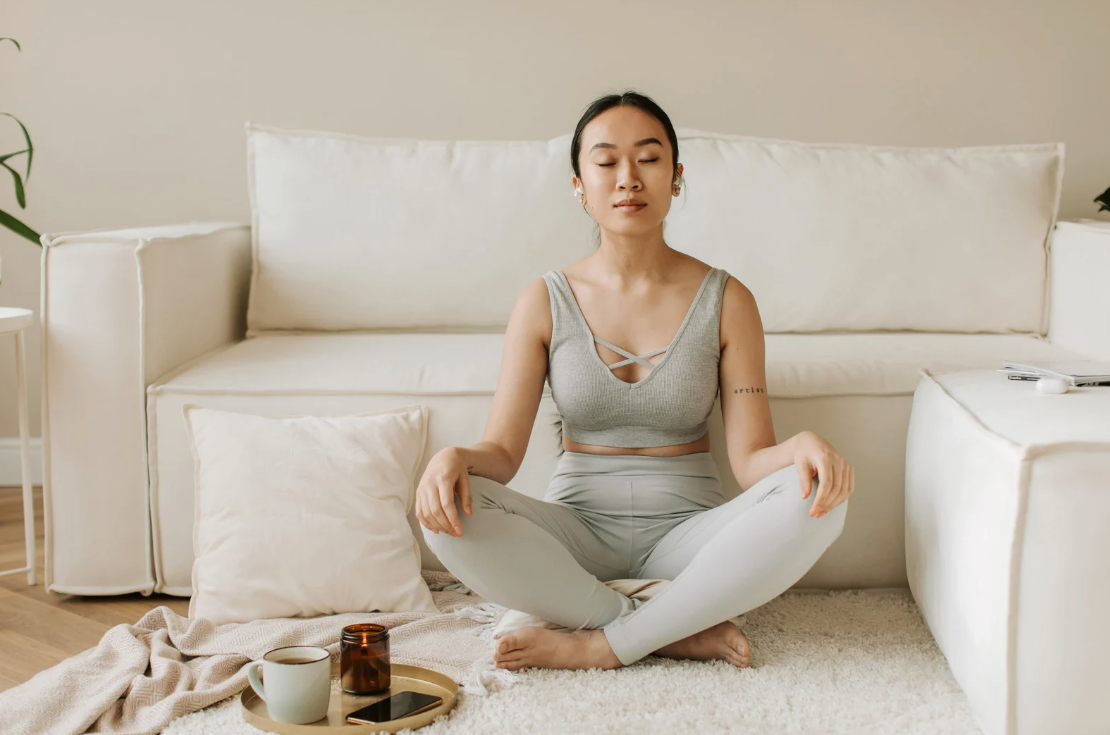
A meditation space does not have to be a separate room. A familiar chair, a little corner beside the bed or a sheltered spot in the yard can be enough to mark a pause in your day.
Choose a place that works for your body, your household and the time you actually have. Your spiritual practice does not need a professionally styled setting to feel meaningful.
Begin with comfort and access
Try the place before arranging it. Can you sit, stand or rest in a supported position without straining? Is there enough room to move safely? Can you reach what you need without making the setup a project?
A chair with your feet supported may suit you better than a floor cushion. You can use a position that accommodates pain, disability or fatigue. Looking like a meditation photograph is not the goal.
Choose a realistic level of quiet
A home with children, pets, housemates or street noise may never be silent. Look for fewer interruptions rather than perfect conditions. Let people know when you would like a short pause, and agree on what that means in shared space.
If background sound helps, keep it comfortable and stay aware of anything you need to hear. If you have caring responsibilities, choose a time and arrangement that does not leave someone without needed supervision.
Three spaces to consider
A familiar chair
Keep a light blanket or notebook nearby. Turn slightly away from a distracting view if that helps.
A bedroom corner
A small clear surface can hold a meaningful object. Use a position that feels comfortable rather than forcing yourself to sit upright.
A porch or yard
Choose safe footing, comfortable weather and a little privacy. Keep an indoor alternative for days when outside does not suit you.
Add a signal that the pause has begun
Unfold a cloth, turn on a small lamp or open your journal. A simple repeated gesture can help the space feel distinct from the rest of the day. If prayer, a crystal or a photograph belongs in your practice, include it because it matters to you, not because a kit is required.
Battery lighting can give a soft glow without an open flame. Keep walkways clear and place objects where children and pets cannot swallow or knock them over. A scent-free, smoke-free space is an easy option for a shared home.
Make the first visit short
- Settle into a comfortable position.
- Notice the support beneath you and a few details in the room.
- Choose an intention, a prayer or a quiet focus.
- Let your breathing remain natural.
- Close after a few minutes and return to the day.
You can keep your eyes open, use a guided recording or simply notice the sounds around you. If a practice feels uncomfortable, change it or stop. A pause is allowed to be brief.
What if you cannot keep a permanent corner?
Use a small pouch or box with a notebook and one optional object. Set it out, practise, then put it away. The portability can be part of the ritual rather than a compromise you need to apologize for.
A flexible rhythm may work better than the same time every day. Returning after a gap still counts; you have not spoiled the space or lost your place in a spiritual process.
Let the space change with you
After a week, ask what made it easier to begin and what kept getting in the way. Move a chair, shorten the practice or remove an object that feels like clutter. Keep what supports your attention and leave the rest.
Starting small and realistic with meditation time is crucial. Overcommitting can lead to discouragement.
Agreed. Consistency is more important than duration when building a new habit.
Yes, starting with just a few minutes can build a sustainable routine over time.
The idea of having a sacred space, even if it’s just a corner, is very appealing. Personalizing it can make the practice more meaningful.
Absolutely. Personal touches can make the space feel more inviting and special.
The recommendation to talk to others or join group meditations is valuable. Community support can enhance the meditation experience.
I appreciate the focus on using the five senses to enhance the meditation space. It makes the process more holistic.
Indeed, engaging all senses can deepen the meditation experience.
I found the section on calming the mind very useful. It’s good to know that it’s normal for thoughts to come and go during meditation.
Including comfort items like pillows and blankets is a great idea. Comfort can significantly impact the quality of meditation.
The article is well-structured and offers practical advice on setting up a meditation space. It’s helpful to have such clear guidelines.
This article provides a comprehensive guide to creating a meditation space. It’s essential to have a dedicated area for such practices.