

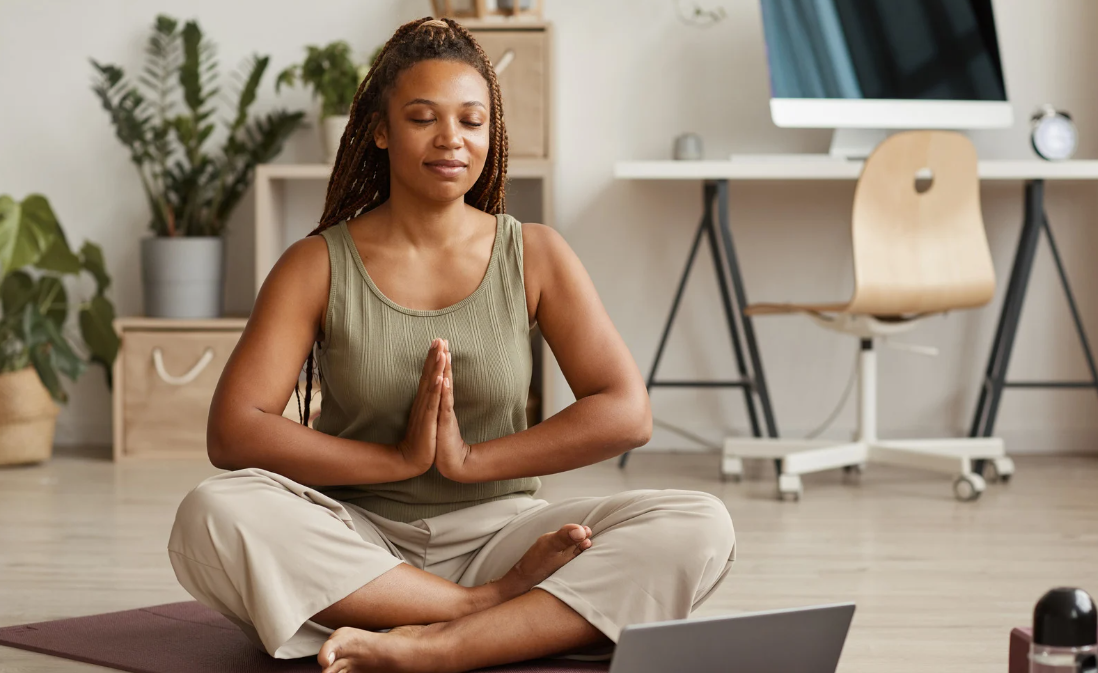
Sometimes it is easier to settle when a voice gives you a little direction. A guided meditation can offer that structure while leaving room for your own sense of connection—with your higher self, your faith, nature or the people and experiences you hold dear.
You do not have to visualize clearly or reach a special state. Choose words that fit your beliefs and keep the practice comfortable enough to return to.
Choose the kind of connection you want to explore
Would gratitude, compassion, inner listening or a sense of belonging feel most useful today? Starting with one theme makes it easier to choose a recording or shape a short practice of your own.
Look for a voice and pace you like. Check the length before beginning, and choose a time when you do not need to drive, operate equipment or give another task your full attention. Headphones are optional.
A short script you can read or record
Settle somewhere comfortable. Let your eyes stay open or close them if that feels right. Notice where you are supported and allow your breath to move at its own pace.
Bring to mind a place that feels welcoming. It may be a garden, a room or an imagined landscape. If no image comes, choose a word such as steady, welcome or here.
Remember one source of support: a person, an animal, a spiritual belief or a small experience of kindness. You do not need to make yourself feel grateful for something difficult. Simply notice what you can welcome now.
If you have a question, offer it gently: “What quality would help me meet the next step?” Let ideas arise without requiring an answer. You can consider them later.
Return your attention to the room. Notice a few sounds or colours, move your hands and finish when you are ready.
Make the imagery your own
You may picture a guide, a light or a familiar spiritual symbol. Another person may prefer no imagery at all. A meaningful inner experience does not need to be turned into proof of an external message, and you do not have to obey an impression because it felt vivid.
Afterwards, write what you noticed and what you think it means. Keep those two parts distinct. An image can invite a useful question without predicting an event or revealing another person’s thoughts.
What to look for in a recording
- Choice: it offers alternatives rather than insisting you close your eyes, breathe a particular way or accept its beliefs.
- A manageable length: a few minutes may suit you better than a long session.
- Clear language: it describes the practice instead of promising a cure or guaranteed contact.
- A comfortable ending: there is time to return to your surroundings.
- No pressure: you do not need a purchase to finish the experience or stay spiritually safe.
If the practice does not feel good
You can open your eyes, turn off the recording and look around the room. Try an ordinary activity or speak with someone supportive. Feeling unsettled is not a sign that you must push through a spiritual blockage.
The NCCIH overview of meditation and mindfulness notes that negative experiences can occur. A spiritual practice can accompany appropriate care; it should not replace help for persistent distress or health symptoms.
Carry one gentle idea into the day
Choose a small action that matches the quality you explored: send a kind message, give yourself a pause or ask for help. You do not need to repeat the meditation until you feel certain. Let the practice end and leave room for ordinary life.
Patience and clarity are highlighted in the final thoughts, which are vital for a successful spiritual journey. It’s a good reminder for everyone.
I appreciate the step-by-step instructions on how to meditate. The visualization techniques mentioned could be quite beneficial for someone looking to reduce stress.
The visualization techniques mentioned here are quite vivid. It could be effective in helping individuals find peace and clarity.
I agree, the imagery used in the guided meditation can really help to immerse oneself in the experience.
The concept of having a spiritual guide or angel is fascinating. It could provide a sense of comfort and guidance.
The idea of connecting with the spiritual world to enhance self-care is well-articulated. The emphasis on building a spiritual community for support is a thoughtful point.
The visualization techniques for meditation described are quite detailed. They seem to offer a structured approach to achieving a peaceful state of mind.
The notion of having a spiritual guide as part of the meditation process is intriguing. It provides a sense of support and comfort, which might be helpful for many.
The connection between meditation and spiritual well-being is compelling. The guided meditation steps mentioned could serve as a useful tool for those new to the practice.
It’s fascinating how the article links the practice of meditation with improved mental health. It makes one consider the broader impacts of regular meditation.
The article provides a detailed guide on how to meditate effectively. It’s interesting to see how it connects meditation with the concept of spiritual well-being.
I appreciate the step-by-step guide on how to meditate. It makes the process approachable for beginners.
Indeed, the detailed instructions are very helpful for those new to meditation.
The article’s approach to meditation as a means to connect with one’s higher self is presented in a clear and concise manner. It provides practical advice for individuals seeking spiritual growth.
The methods of meditation described seem very detailed and supportive. It might be worth trying for those who are seeking a deeper connection with their inner self.
Incorporating nature into the meditation practice might help in enhancing the overall experience. It’s a nice touch.
It’s interesting how the article emphasizes the importance of being part of a spiritual community. This could be a great way to find support and companionship.
The importance of gratitude and thankfulness during meditation is a noteworthy point. It can positively influence the meditation experience.