

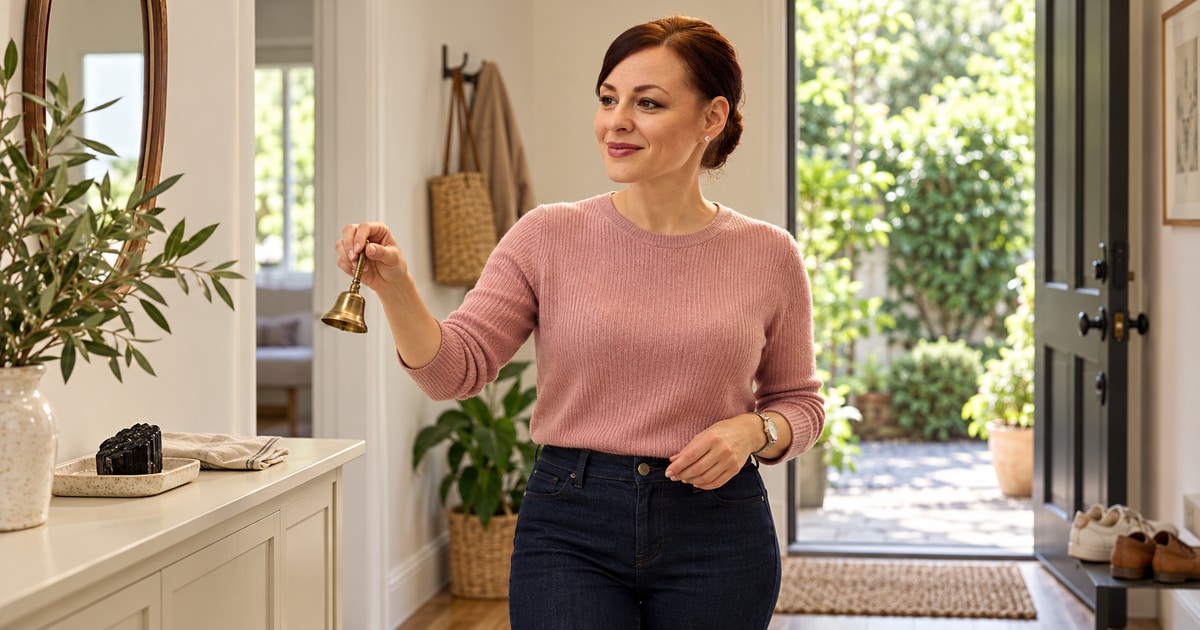
Sometimes a room feels ready for a fresh beginning. A home-cleansing ritual can help you mark that moment: clear a little space, set an intention and welcome the feeling you want to nurture.
You do not need an elaborate kit or a house full of smoke. This guide focuses on a simple, smoke-free ritual you can adapt to your beliefs, your budget and the people or animals who share your home.
A gentle reset in five steps
- Choose one room or corner.
- Clean or tidy one practical thing.
- Set an intention in your own words.
- Add quiet reflection, gentle sound or a meaningful object.
- Close the ritual with one small act of care.
Begin with the feeling you want to welcome
Instead of searching for everything that might be wrong with a room, choose what you want to make more room for. Rest after a demanding week? A kinder atmosphere after an argument? A sense of belonging in a new home?
Keep the intention specific and kind. “I want this corner to help me unwind” gives you a clear direction. “I must remove every trace of negativity” can turn a comforting ritual into a task that never feels finished.
Sadness, illness and grief do not make a person spiritually dirty. A ritual can honour a difficult chapter without blaming anyone for the feelings they bring into a space.
Give the intention a practical starting point
Choose something visible and manageable: put away the shoes by the door, wipe the bedside table or clear one chair. Leave major decluttering for another day if you do not have the time or energy. A small completed task often makes a better beginning than an ambitious unfinished one.
Check the everyday details too. A ritual does not replace fixing a hazard, dealing with damp, cleaning a spill or responding to an alarm. If the concern is indoor air, the EPA recommends addressing pollution sources and using appropriate ventilation. A pleasant feeling and a practical safety check serve different purposes.
Choose a smoke-free way to mark the change
Your own words
Say a prayer, read a short intention or write one sentence in a journal. Use language that belongs to your own beliefs.
A gentle sound
Ring a small bell softly, play a favourite piece of music or hum. Keep the volume comfortable for everyone nearby.
A meaningful object
Place a crystal, photograph or other treasured object on a stable surface as a reminder of the quality you want to welcome.
If you enjoy crystals, black tourmaline is often associated with grounding and protection in contemporary crystal practice; clear quartz is often used to symbolize clarity. You can appreciate those associations without treating a stone as a security device or a treatment. One small object is enough, and there is no need to buy anything.
Keep loose stones away from children and pets. Avoid placing small or fragile objects in bedding, walkways or somewhere they may fall.
Why this routine leaves out smoke and fragrances
Smoke-free does not mean spiritually incomplete. It makes a ritual easier to share with people who have breathing sensitivities, live in rented accommodation or simply prefer unscented rooms. The EPA identifies burning candles and incense as sources of indoor particles. Burning herbs should not be described as a way to purify indoor air.
Essential oils also need care. The ASPCA warns about concentrated oils around pets and advises against applying them directly to animals. Rather than trying to work out which scent is suitable for every household member, you can choose no scent at all.
Enjoy a decorative lamp or a suitable houseplant if you like them, but do not expect either to remove toxins or prevent illness. Keep ritual meaning separate from claims about air quality and health.
A room-by-room example
At the entrance: welcome
Put away one item that blocks the doorway. Touch the doorframe or pause beside it and say, “May this home be a place of welcome and respectful boundaries.” Decide on one habit that supports that intention, such as giving yourself a quiet minute before opening messages after work.
In the bedroom: rest
Clear a little space beside the bed and put tomorrow’s notebook within reach. Choose silence or a short, gentle piece of music. Let your intention be about how you want to use the room, rather than a promise that an object will prevent nightmares or guarantee sleep.
In a shared room: kindness
Ask the people who use the space what would make it more comfortable. Perhaps that means a clear table, a lower volume or agreeing on a time to stop work. A shared agreement can give a symbolic reset a practical expression.
Respect the home and the traditions you draw from
Not every cleansing practice has the same history or meaning. Avoid treating all cultures as one interchangeable collection of tools. If a ceremony interests you, learn about its specific community and context rather than assuming that purchasing an object gives you access to the whole tradition.
You are free to create a simple personal ritual using familiar words, music and objects. It does not need an exotic name to be meaningful.
Close the ritual instead of endlessly checking it
Notice one thing that has changed: a clear surface, a calmer arrangement or a sentence you want to remember. Thank yourself for the attention you gave the room and finish with one act of care. Make a cup of tea, send the apology you have been considering or set out what you need for tomorrow.
If the space still feels emotionally heavy, that does not mean you failed or need to pay someone to remove a threat. You may need rest, a conversation, practical help or time. A ritual can support a transition without doing all the work of the transition.
Home-cleansing questions
1. Can I cleanse my home without burning anything?
Yes. An intention, a tidy surface, gentle sound, prayer or a quiet walk through the room can form a complete smoke-free ritual. You do not need incense or burning herbs.
2. What is the difference between spiritual cleansing and cleaning?
Cleaning deals with practical things such as dust, spills and clutter. Spiritual cleansing gives the change a personal meaning through intention or ritual. One can accompany the other, but a ritual does not disinfect a room.
3. How often should I do a home-cleansing ritual?
Choose a rhythm that feels useful rather than compulsory. You might mark a move, a new season or the end of a stressful week. There is no universal schedule you must follow to stay safe.
4. Do I need special tools?
No. You can begin with a few quiet minutes and something you already own, such as a journal or a favourite piece of music. A crystal or bell is optional, not a requirement.
5. Can crystals protect my home?
Some people use crystals as symbols of protection, grounding or welcome. They are not a replacement for working locks, smoke alarms, repairs or other practical safety measures.
6. Will a salt lamp remove toxins from the air?
Do not rely on a salt lamp to clean the air. Enjoy it as a decorative light if you like it, follow its electrical instructions and keep it away from moisture and pets.
7. Are plants a substitute for ventilation or filtration?
No. Enjoy suitable plants as part of your space, but address indoor-air problems through their sources, appropriate ventilation and suitable filtration. Check plant safety if you have pets or children.
8. Can I use essential oils around my pets?
Do not assume a natural oil is safe for animals. Ask your veterinarian about the specific product and pet, keep oils out of reach and never apply them directly to an animal. A scent-free ritual is the simplest alternative.
9. What if someone in my home has asthma or scent sensitivity?
Choose a smoke-free, fragrance-free practice and respect their preferences. Silence, a written intention or a short tidy-up can be just as meaningful as a scented ritual.
10. Can I cleanse just one room?
Yes. Start with the space where you spend time or where you want a fresh beginning. You do not need to complete the whole home for a ritual to feel worthwhile.
11. What can I say during the ritual?
Use words that fit your beliefs. For example: May this room support rest, kindness and clear boundaries. You can also pray in your own tradition or say nothing at all.
12. Should I cleanse after an argument?
You can use a ritual to mark a reset, but it does not replace an apology, a boundary or a conversation about what happened. Pair the symbolic fresh start with one practical repair.
13. Is grief a sign of negative energy in my home?
No. Grief is not contamination or evidence that you have attracted something harmful. If a small ritual comforts you, it can make room for remembrance without requiring you to erase sadness.
14. What if I live with people who do not share my beliefs?
Ask before introducing smoke, scents, sound or spiritual objects into shared space. A quiet practice in your own room can respect both your beliefs and theirs.
15. How do I know when to finish?
End when the small task and intention you chose are complete. Notice one change, close the ritual and return to your day. You do not need to keep repeating it until a particular sensation appears.
It’s interesting how many cultural and spiritual practices are integrated into the process of home cleansing.
Using essential oils and plants for home cleansing can also contribute to better indoor air quality, which is an added benefit.
Dream catchers and salt lamps are intriguing additions, although I would like to see more empirical evidence of their efficacy.
Agreed. These items are often marketed heavily, but it’s unclear how effective they really are in eliminating negative energy.
While empirical evidence might be lacking, the psychological comfort these items provide shouldn’t be underestimated.
Music and bells for cleansing the environment seem accessible and non-intrusive methods. They also have immediate sensory impacts.
While these methods are easy to implement, it’s essential to understand that they might work differently for everyone.
Indeed, many cultures believe in the power of sound to cleanse and uplift energy in a space.
The use of smudging and crystals seems rooted in ancient practices, but I wonder if there is scientific evidence supporting their effectiveness.
I appreciate the emphasis on physical changes like decluttering and the arrangement of furniture as per Feng Shui principles.
Yes, those steps seem more tangible and directly impactful on one’s environment.
Overall, the article offers a comprehensive guide to various ways of cleansing a home, catering to both physical and spiritual aspects.
The article provides practical steps and a variety of options for cleansing a home, which could be useful for different types of households.