

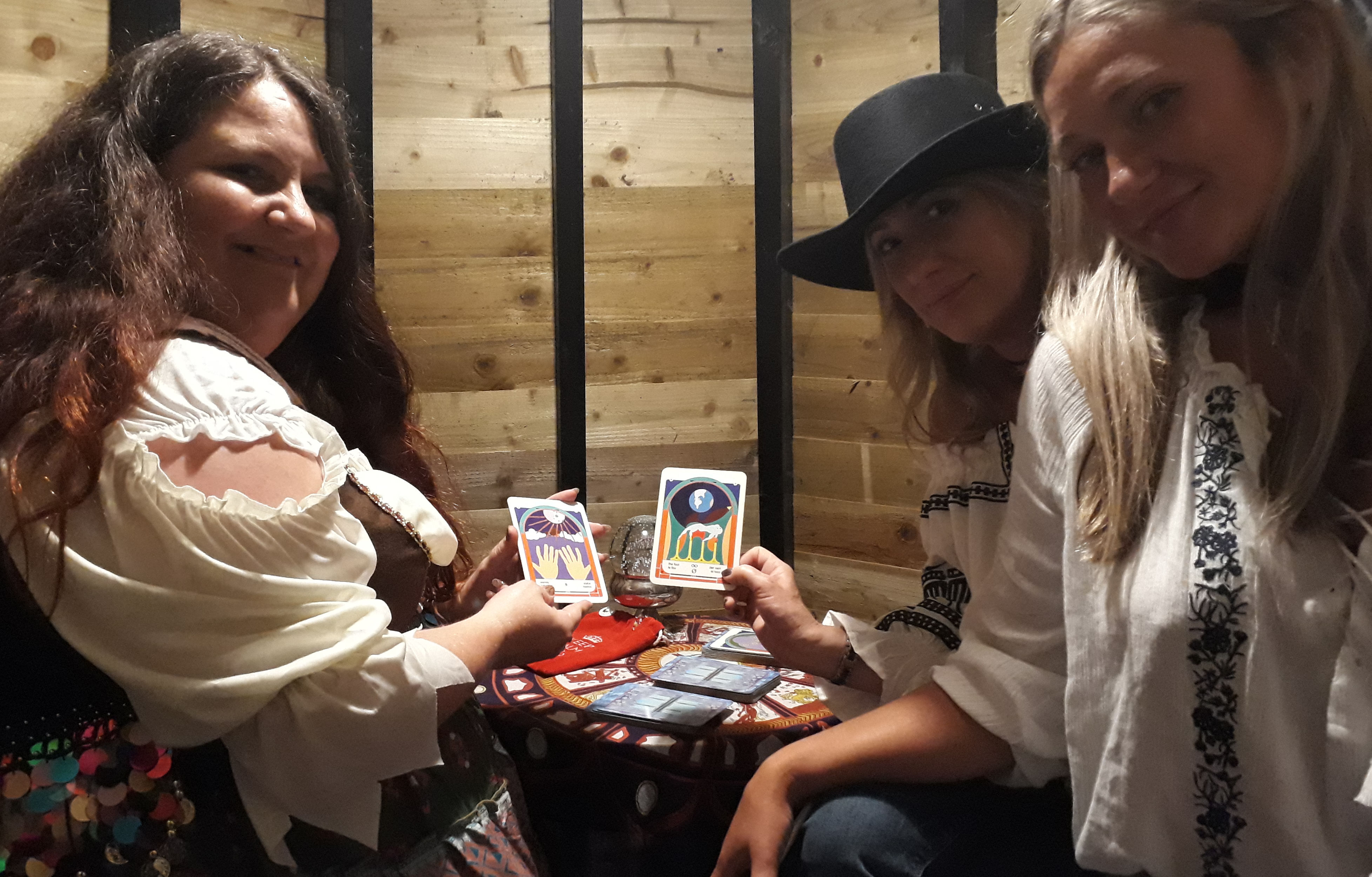
Sharing a reading with someone close to you can be enjoyable when both people freely want it. Familiarity can also make it harder to separate an interpretation from your own hopes, opinions and knowledge of their life.
You are allowed to offer a careful practice session, choose a smaller topic or decide that reading for loved ones is not for you. Protecting the relationship matters more than proving a gift.
Ask without making acceptance a favour
“Would you like to try a short tarot reflection?” should leave an easy no. Do not present an unsolicited message about a sensitive issue and then ask for consent after it has been said.
A person agreeing once has not agreed to ongoing readings, surprise interpretations or discussion of their private life at family gatherings.
Name the difference between your opinion and the reading
You may already know the person’s history or have a view about what they should do. Acknowledge that rather than presenting familiar information as a new discovery.
If an ordinary opinion is relevant, label it: “As your friend, I have a concern about what you described. That is separate from this card.” You can also decide not to continue the reading.
Choose a topic with room for reflection
| A topic that may be manageable | A limit to keep |
|---|---|
| A creative project or routine | Do not turn an image into a guaranteed outcome. |
| A conversation they want to prepare | Stay with their own words and choices, not an absent person’s secret motives. |
| A personal intention | Let them decide what fits and what to leave aside. |
| A family gathering | Do not diagnose relatives, label children or predict conflict. |
Health, treatment, legal matters and consequential financial decisions need appropriate information and qualified support. A familiar relationship does not make a reading evidence.
Make disagreement comfortable
Say that an interpretation may not fit and that they do not need to explain why. Do not use family knowledge to argue them into accepting a statement.
If either person becomes uncomfortable, stop. There is no need to finish a spread or pull a final card before ending.
Try a one-card reading with a friend
Suppose a friend asks for a reading before joining a community choir. Agree on a question they can act on, such as “What would help me feel comfortable at the first rehearsal?” Draw one card and invite them to notice something in the picture.
If the Three of Pentacles comes up, you might ask, “Does the scene make you think of a way someone could help you get started?” They might decide to ask the organiser whether they can watch the first rehearsal. If the image brings up something different for them, give their interpretation room.
If your friend asks whether you think they should join, check whether they want your opinion as a friend. That gives you both a clear place to end the reading. To get comfortable with the format first, use the same approach in a daily one-card practice.
Keep private information private
Do not retell the session to another relative, share screenshots or use a story as a testimonial without specific permission. A family member’s curiosity is not automatic access to the conversation.
Ask before taking notes or recording. You can choose not to collect anything at all for an informal practice session.
Agree on practical expectations
Set a beginning and ending so the reading does not become an on-call role. If a fee is involved, make the amount and terms clear without using the relationship to pressure a purchase.
You can say “I am not offering readings at family events” or “I would rather be here as your friend.” Neither requires an apology for having limits.
Offer ordinary support when that is what is needed
If someone is frightened, overwhelmed or in practical difficulty, ask what help would be welcome. A ride, company or help finding qualified support may be more useful than another interpretation.
Do not make them choose between accepting your reading and receiving your care. You can remain a friend without having an answer.
Leave the decision with them afterward
They can find a theme useful, disagree or take no action. Do not monitor whether they followed the cards or treat a later event as proof you knew best.
A shared reading should leave space for the relationship to continue outside the reader-and-sitter roles.
The author’s experiences with picking up impressions accidentally during the psychic development stage are insightful. It’s good to be aware of this possibility.
The suggestion to openly communicate with loved ones about why you can’t provide readings to them is crucial for avoiding misunderstandings.
The distinction between acquaintances and loved ones in providing readings is an interesting point. Emotional connections can indeed cloud judgement.
The personal choice aspect is well-emphasized. It ultimately comes down to an individual’s comfort and professional practice.
It’s wise to recognize the difficulty in turning off and on psychic abilities, especially for those new to the field.
The advice to refer loved ones to a trusted colleague makes sense. It ensures that readings are accurate and impartial.
It’s interesting to read about the challenges of separating personal life from professional responsibilities in such an intimate line of work.
I agree. Balancing personal and professional boundaries in this field must be quite complex.
Yes, especially when it involves subjective insights and emotions.
The advice to be comfortable and not feel pressured when giving readings is important. Ensuring one’s own comfort can improve the quality of the reading.
The process of learning to trust one’s intuition seems crucial in the field of psychic development. It’s clear why the author advises caution with loved ones.
The complexity of differentiating between intuition and personal thoughts is well explained. It underscores the importance of maintaining boundaries.
The author’s perspective on keeping professional and personal lives separate is quite sound. It avoids potential biases and maintains objectivity.
Offering readings to acquaintances seems like a reasonable compromise. Less emotional attachment might yield clearer insights.
Maintaining clear boundaries to avoid being taken advantage of is sound advice. It reinforces the idea that psychic readings should be a positive experience for all involved.
The author’s point about not being able to differentiate between personal thoughts and intuitive readings is a valid concern.
The advice to refer loved ones to a trusted colleague is a good practice. It maintains professional integrity and personal relationships.
I appreciate the nuanced approach. It’s important to respect one’s boundaries and those of others in psychic work.