

Quick guide
An aura, in popular and spiritual use, is a field of color or light said to surround a person and reflect their mood, health or character. It is a belief with a long history in religious art and in late 19th and 20th century esoteric writing, not a measurable thing: no instrument has detected a human energy field, and aura cameras measure skin moisture and temperature from hand sensors, not light around the body. People do sometimes see faint color or a halo around others, and that has ordinary explanations, mainly afterimages, lighting and expectation. Aura color meanings are a tradition that can be used as a prompt for reflection, in the same way as a tarot card or a horoscope. Energy healing such as Reiki involves a calm room, gentle attention and light or no touch; the relaxation people feel is real, while the energy explanation is not supported and no form of energy healing treats or cures any illness. This guide explains all of that plainly, gives a color table as tradition, and shows how to choose a practitioner safely if you want one.
Few words in the spiritual vocabulary are used as freely as “aura”. Someone has a warm aura, a shop sells aura photographs, a friend says yours looks blue today. Behind the casual use sits a real question: is there anything there to see, and if so, what does it mean? The honest answer has two halves. The first is that the aura as an energy field is a belief without evidence, and the colors are a tradition rather than a reading of anything physical. The second is that the experiences people describe, a glow at the edge of a face, a sense of someone’s mood on meeting them, a deep calm after a healing session, are real experiences with ordinary explanations worth knowing. This guide walks through both halves without mocking either.
What people mean by “aura”
The idea of light around a person is old. Halos in religious paintings, the “glory” around saints, and descriptions of radiant teachers appear across many traditions. The modern version, a layered colored field that a sensitive person can see and read, comes mostly from Theosophical writers in the late 1800s and early 1900s, who described several “subtle bodies” nested around the physical one, each with its own color and meaning. Later New Age writing simplified this into the seven-layer aura that matches the seven chakras, and added the color dictionary that most aura articles reproduce today.
In everyday conversation, aura usually means something looser: the overall impression a person gives off. That impression is real, and it is built from posture, facial expression, tone of voice, eye contact, clothing and how someone treats the people around them. We read these cues in seconds and often cannot say which ones we noticed, so the result feels like sensing a field rather than noticing details. Calling that an aura is fine as a figure of speech. The problems start only when the figure of speech is treated as a physical object that can be photographed, damaged or cleansed for a fee.
Why we sometimes “see” colors around people
Many people who believe in auras do so because they have seen something. Usually it was a pale band of light or color around a person’s head or shoulders, especially when the person was in front of a plain wall. Three ordinary things produce exactly that effect. The first is the afterimage. When you look steadily at a shape for twenty or thirty seconds, the cells in your retina that respond to its brightness and color tire, and when your eyes shift even slightly, a ghost of the shape appears in the opposite color. A face against a light wall produces a faint outline that seems to hover at the edges, and if the person is wearing a strong color, the afterimage shows up in its complement, so a red sweater produces a greenish fringe.
The second is lighting. Backlighting, a window behind someone, a lamp just out of view or the slight blur of tired eyes all put a soft rim of light around a silhouette. The third is expectation. If you have been told that auras exist and that you may be able to see them, your attention goes to the edges of people, and the small effects above get noticed and interpreted. This is a normal feature of perception rather than a failing, and it is well described under confirmation bias: we notice what fits and overlook what does not. You can test all three for yourself with the steps below.
Check what you are seeing in four steps
- FixLook steadily at a point on a friend’s forehead, with a plain light wall behind them, for about thirty seconds without blinking much.
- ShiftMove your gaze to the empty wall beside them. A faint outline or color will appear and fade within a few seconds. That is an afterimage.
- ChangeTurn off the lamp behind them or move them away from the window and repeat. The rim of light changes with the lighting, not with the person.
- SwapAsk them to change into a different colored top. If the fringe you see changes to the opposite color, you are seeing your own eyes at work.
The experience is real. The explanation is in the eye, not around the person.
What about aura photographs?
Aura photographs are popular at fairs and in some shops, and they are fun. It helps to know what the camera does. The sitter places their hands on sensor plates that measure skin moisture and temperature, which change with warmth, nervousness and how recently you washed your hands. The device converts those readings into colors and overlays them on a photo of you. It is not capturing light around your body, which is why two photos taken minutes apart can look quite different. An older technique, high-voltage contact photography, produces a glowing fringe around any moist object, including a coin or a leaf, because it records electrical discharge at the surface. Neither method shows a field, and neither can tell you anything about your health, love life or spending habits.
Aura colors as a tradition
If you enjoy the symbolism, the table gives the meanings most often attached to each color in New Age writing, with a question you can use for reflection. These are not readings of anything physical. They work the way a tarot card works: as a prompt that helps you think about your own situation. Choose the color you feel drawn to today and sit with the question for a minute.
| Color | Traditional meaning | Reflection question |
|---|---|---|
| Red | Energy, drive, strong feeling, sometimes anger | Where is my energy going right now, and is any of it anger I have not named? |
| Orange | Creativity, warmth, enjoyment | What would I make or do this week purely for the pleasure of it? |
| Yellow | Confidence, optimism, clear thinking | Which decision would I make today if I trusted myself a little more? |
| Green | Growth, healing, balance, the heart | What relationship or habit is quietly growing, and what needs tending? |
| Blue | Calm, honesty, communication | What have I been meaning to say, and to whom? |
| Purple or violet | Intuition, imagination, spiritual interest | What hunch have I been ignoring, and how could I check it? |
| White or gold | Clarity, openness, a sense of meaning | What matters most to me this season, and does my calendar show it? |
| Gray or dark | Tiredness, low mood, feeling stuck | Am I worn down, and who could I tell? |
Notice that the last row is where the tradition can quietly cause harm. A “dark aura” is sometimes used to frighten people, and a “muddy” or “blocked” aura is the usual lead-in to an offer of paid cleansing. If a reading leaves you feeling that something is wrong with you that only the reader can fix, the reading is the problem.
Energy healing: what is real and what is not
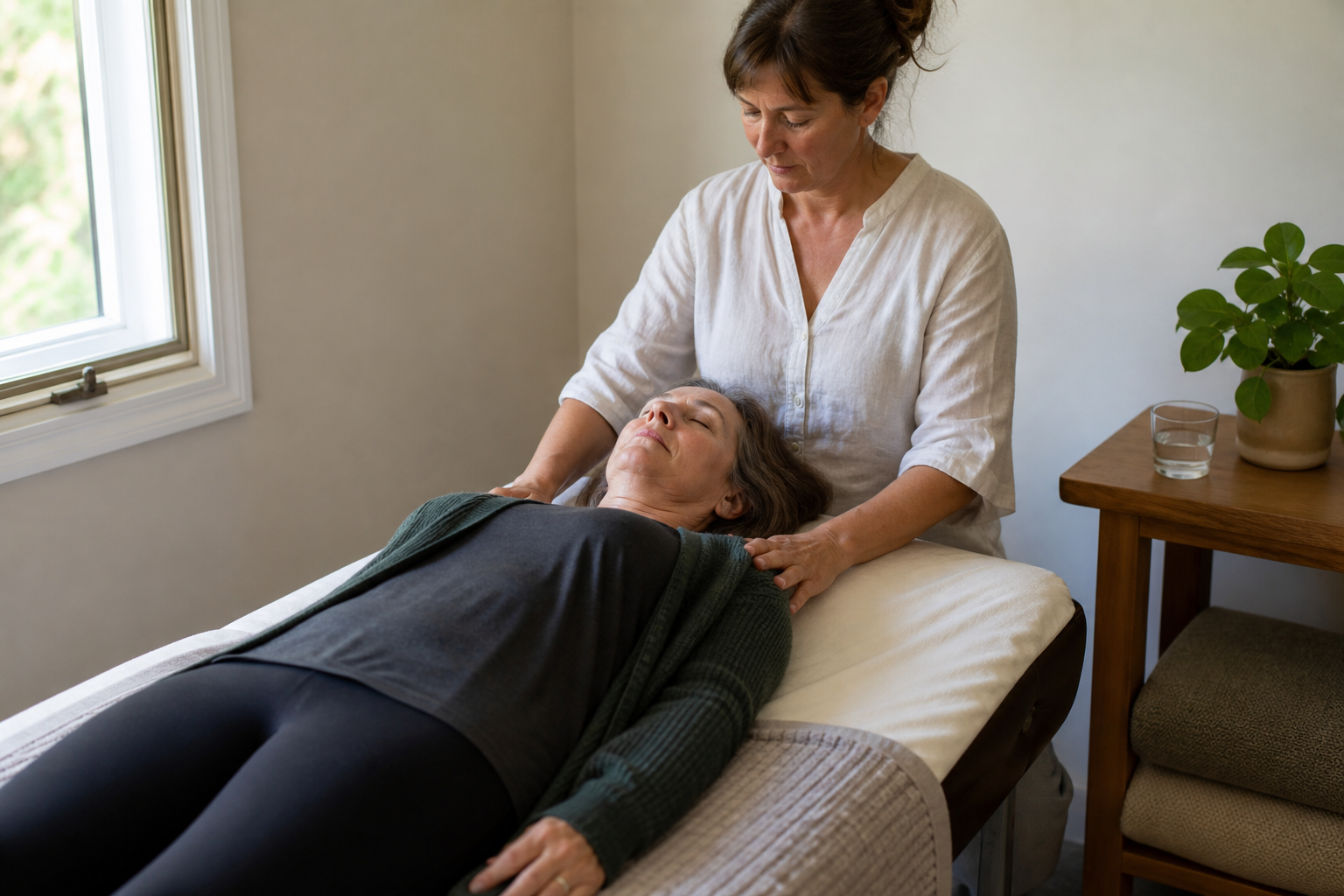
Energy healing covers practices such as Reiki, therapeutic touch, hands-on healing and “aura cleansing” sessions, in which a practitioner holds their hands on or near the body with the aim of balancing an energy field. The position taken by research bodies in the United States, including the National Center for Complementary and Integrative Health, is straightforward. No scientific instrument has detected the energy field these practices describe, and studies that compare real sessions with carefully faked ones generally find no difference beyond the effects of lying quietly in a calm room with a kind person paying attention to you. Those effects are not nothing. People reliably report feeling relaxed, less anxious and more comfortable after a session, and that is a reasonable thing to want.
What energy healing cannot do is treat, slow or cure any illness, and the safety concern is not the session itself but what it might replace. Nobody should delay a doctor’s appointment, stop a medication or skip a test because a practitioner said the energy was clearing. If you are drawn to these sessions, enjoy them as a form of structured rest, keep your medical care exactly as it is, and watch for the warning signs below. For persistent low mood or anxiety, the plain guidance on caring for your mental health from NIMH is a better starting point than any session, and if you ever have thoughts of harming yourself, call or text 988.
Choosing a practitioner safely
- Decide what you want from it. If the answer is “an hour of calm” you are on solid ground. If the answer is “to fix my thyroid” or “to stop my depression”, book a doctor first.
- Ask what they claim. A good practitioner describes relaxation and support and says plainly that the session is not medical treatment. A practitioner who promises to cure, clear curses or remove entities is not someone to see.
- Check the money. A single session has a clear price. Packages that require many sessions to “finish the clearing”, prices that rise with urgency, or a request for cash only are warning signs.
- Keep your clothes on and your boundaries clear. Reputable energy healing is done fully clothed with light or no touch, and you can say stop at any moment.
- Notice how you feel afterward. Calmer and lighter is the normal result. Frightened, dependent or told you need to come back urgently means walk away.
- Keep it separate from medical care. Tell your doctor if you are using any complementary practice, and never change a treatment on a practitioner’s advice.
What to keep and what to avoid
- Keep the reflection. Picking a color and sitting with its question is a quick, pleasant way to check in with yourself.
- Keep the rest. A quiet room, slow breathing and someone’s calm attention are genuinely restoring, with or without an energy story.
- Keep your curiosity. Trying the afterimage test is a good way to learn how your eyes work, and it does not take anything away from the experience.
- Keep the figure of speech. Saying someone has a warm aura is a lovely way to describe how they make you feel.
- Avoid cleansing for a fee. “Your aura is dark and I can clear it for a price” is the same script as curse removal. The Federal Trade Commission guide on what to do if you were scammed explains how to report it and try to recover money.
- Avoid health conclusions. No color, photograph or practitioner can tell you whether you are ill. Symptoms go to a doctor.
- Avoid judging people by their “aura”. A gut impression is built from cues you half-noticed and can be wrong. Give people the chance of a conversation.
- Avoid smoke and fire risks. If you enjoy burning sage or incense as a ritual, treat it as a scent and a routine, open a window, and keep it away from children, pets and anyone with breathing problems.
Key takeaways
- The aura as a colored energy field is a belief from esoteric tradition; no instrument has detected one, and aura cameras read hand moisture and temperature, not light.
- Seeing a glow around someone has ordinary causes: afterimages, lighting and expectation, and you can test all three yourself.
- Aura color meanings are a tradition you can use for reflection, like a tarot card, not a reading of your body or life.
- Energy healing produces real relaxation; the energy explanation is unsupported and no session treats or cures illness.
- Choose practitioners who promise calm rather than cures, keep medical care unchanged, and never pay to have a “dark aura” cleared.
Related reading
- What Is a Purple Aura?
- Energy Healing
- Spiritual Healer
- Becoming a Healer
- Using Self-Healing Quickly
- Opening the Seven Chakras
- Meditate the Easy Way
Frequently asked questions
1. What is an aura?
In spiritual use, an aura is a field of color or light believed to surround a person and reflect their mood or character. In everyday use it means the overall impression someone gives off. The first is a belief; the second is built from real cues such as posture, expression and tone.
2. Are auras real?
No instrument has ever detected a human energy field, so the aura as a physical thing is not supported. The experiences people attach to the word, such as seeing a glow or sensing a mood, are real and have ordinary explanations.
3. Why do I see colors around people?
Most often it is an afterimage: staring at a face tires the retina and a faint outline in the opposite color appears when your eyes move. Backlighting and the expectation of seeing something add to the effect.
4. Can I learn to see auras?
You can learn to notice afterimages and rim lighting more easily, which is what aura-viewing exercises train. That is a real skill of attention, but it is not seeing a field around the person.
5. What do aura photographs actually show?
Aura cameras read moisture and temperature from hand sensors and convert the readings into colors over your photo. They do not capture light around the body, which is why two photos minutes apart can differ.
6. What do the aura colors mean?
In the tradition, red suggests energy, orange creativity, yellow confidence, green growth, blue calm and honesty, purple intuition, white clarity and gray tiredness. These are symbolic prompts, not readings of your body.
7. What is a dark or muddy aura?
It is a phrase from the tradition for tiredness or low mood, and it is also the usual lead-in to an offer of paid cleansing. Nobody can see such a thing, so treat the phrase as a figure of speech at most.
8. Can an aura be damaged or torn?
No. Since there is no detectable field, there is nothing to damage. If you feel drained or unprotected, that is a real feeling worth attention through rest, boundaries and, if it persists, a doctor.
9. Can my aura change color?
In the tradition, yes, with mood and circumstances. In practice, what changes is the color you feel drawn to and the impression you give off, both of which shift with how you feel.
10. What is energy healing?
Energy healing covers practices such as Reiki and therapeutic touch, where a practitioner holds their hands on or near the body intending to balance an energy field. Sessions are calm and quiet, and most people find them relaxing.
11. Does Reiki work?
Reiki reliably helps people feel relaxed, and that is a genuine benefit. There is no evidence for the energy field it describes, and studies comparing real and sham sessions find similar results, so the benefit comes from rest and attention.
12. Is energy healing safe?
The session itself is low risk because it involves light or no touch. The risk comes from delaying or replacing medical care, so keep every appointment and medication exactly as your doctor advises.
13. Can energy healing cure illness?
No. No form of energy healing treats, slows or cures any illness. Any practitioner who claims otherwise is making a claim that cannot be supported and that could cause real harm.
14. How do I choose an energy healer?
Look for someone who promises calm rather than cures, states plainly that sessions are not medical treatment, charges a clear single-session price and works fully clothed with light or no touch.
15. Should I pay to have my aura cleansed?
No. Paid aura cleansing follows the curse-removal pattern: an unverifiable problem, fear and a fee that tends to grow. If you have already paid, the FTC guide on being scammed explains how to report it.
16. Does burning sage cleanse an aura?
It cannot act on a field that does not exist, but as a scent and a short routine it can mark a fresh start and feel calming. Open a window, and avoid smoke around children, pets and anyone with breathing problems.
17. Can a psychic read my aura?
A reader can describe the impression you give and reflect your situation back to you, which can be useful as a conversation. They cannot see or measure a field, and any health claim based on your aura should be ignored.
18. What is the difference between an aura and a chakra?
In the tradition, chakras are centers inside the body and the aura is the field around it. Both are symbolic systems rather than measurable things, and both can be used as prompts for reflection.
Evidence note: The aura, its layers and its color meanings are presented here as tradition from Theosophical and New Age writing, not as facts about the body. No instrument has detected a human energy field, aura cameras measure skin readings from hand sensors, and the glow people see around others is explained by afterimages, lighting and expectation, with confirmation bias described per Britannica. The stance on energy healing follows the National Center for Complementary and Integrative Health: relaxation effects are real, the energy explanation is unsupported, and no practice treats or cures illness. Guidance on low mood follows the National Institute of Mental Health; the Federal Trade Commission guide covers reporting paid cleansing scams. If you have thoughts of harming yourself, call or text 988.
The notion of auras and their seven layers seems a bit metaphysical for my taste. However, the idea that we emit energy and vibes is scientifically plausible.
The idea of cleansing one’s aura using meditation and sage is interesting. Practices like these can be beneficial for mental and emotional well-being regardless of one’s belief in auras.
I’ve always felt certain vibes from people and wondered about the reason behind them. The explanation of auras might just offer some clarity. Has anyone tried aura photography?
The concept of auras is intriguing, especially when linked with chakras and different layers. It’s fascinating how ancient beliefs are being explored and explained in contemporary settings.
While the scientific community may not fully endorse the concept of auras, the idea of energy fields around living beings is still worth exploring. The integration of emotional and spiritual layers adds depth.
I’m glad the article touched on how one’s aura can influence social interactions. It’s a subtle yet impactful aspect of our daily lives that often goes unnoticed.
It’s good to see the article balancing scientific recognition of energy emission with the spiritual concept of auras. This duality is often missing in such discussions.
Understanding auras through both a scientific and spiritual lens could offer new avenues for research. The intersection of energy fields and human emotions is a compelling area of study.