

Quick guide
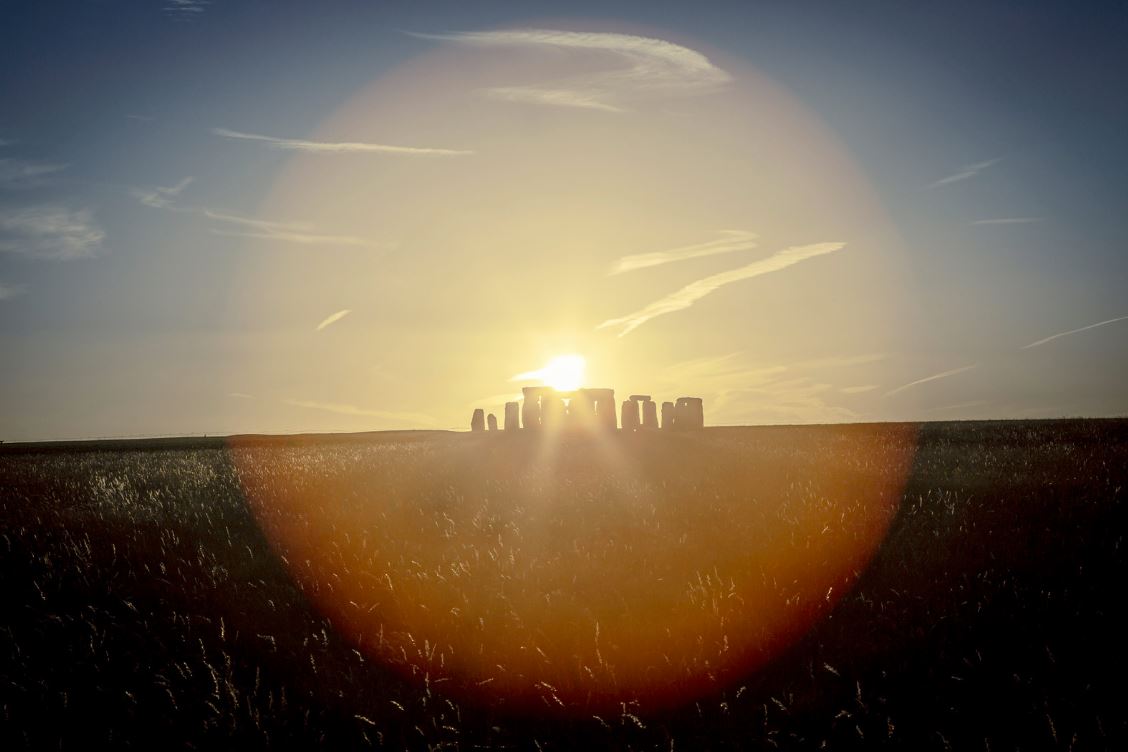
The summer solstice is the moment the Sun reaches its highest point in the sky for the year, which in the northern hemisphere falls on June 20 or 21 and gives the longest day and shortest night. It happens because Earth is tilted on its axis, not because of anything mystical, and the southern hemisphere has its summer solstice in December. People have marked the day for thousands of years, from the builders of Stonehenge to the Midsummer bonfires of Scandinavia and the beach fires of St John’s Eve in Spain. Those customs are culture and tradition; they are enjoyable and meaningful without being magical. You can mark the day simply by watching the sunrise, sharing a meal outdoors, or using the midpoint of the year for a quiet review. If fire is part of your plan, check local rules and keep it small and supervised.
There is something about the longest day that makes people want to stay up late, gather with friends and light a fire. That instinct is old. Long before calendars, the turning point of the Sun was one of the few dates a community could read straight from the sky, and the celebrations that grew around it are among the oldest we know of. This guide covers what the solstice is, how it is celebrated around the world, simple ways to mark it at home, a set of midyear reflection prompts, and the safety basics for candles and bonfires.
What the solstice is, in plain terms
Earth spins on an axis that is tilted about 23.4 degrees. As the planet travels around the Sun, that tilt means the northern half leans toward the Sun for part of the year and away from it for the rest. The June solstice is the day the North Pole leans in most directly. The Sun stands directly overhead at noon along the Tropic of Cancer, climbs higher in the sky than on any other day everywhere north of it, and traces its longest arc from sunrise to sunset.
The word comes from Latin: sol, the Sun, and sistere, to stand still. For a few days around the solstice the point on the horizon where the Sun rises stops drifting north and seems to pause before it starts drifting back south. Ancient observers noticed that pause and built markers to catch it.
Why June 21 is the longest day
- TiltEarth’s axis is tilted about 23.4 degrees relative to its path around the Sun, and that tilt points the same way all year.
- PositionIn June, Earth is at the part of its orbit where the northern hemisphere leans toward the Sun.
- High SunThe Sun rises farther north-east, climbs higher at noon and sets farther north-west than on any other day.
- Long arcA higher, longer path across the sky means more hours between sunrise and sunset: the longest day of the year.
The same tilt gives the southern hemisphere its shortest day on the same date.
A few details people often get wrong are worth clearing up. The solstice is an instant, not a whole day; it falls at a specific time, which is why the date shifts between June 20, 21 and occasionally 22 depending on the year and time zone. It is not the hottest day; land and sea keep warming for weeks afterward, so the peak of summer heat usually arrives in July or August. And how long the day lasts depends on where you stand. At the equator it is about 12 hours as always, in the middle of the United States it is around 15 hours, and north of the Arctic Circle the Sun does not set at all.
In Western astrology the Sun is said to enter the sign of Cancer at the June solstice. That is a convention of the tropical zodiac, which is anchored to the seasons rather than the stars, and astrology itself is a tradition of interpretation rather than a science. The solstice is a fine time to enjoy that tradition if you like it, as long as the astronomy and the symbolism stay in separate boxes.
Solstice traditions around the world
Most cultures north of the tropics have a midsummer festival, and many of them share the same ingredients: fire, flowers, water, staying up through the short night, and a holiday feel. Here are some of the best known. All of them are living traditions, kept because they are beautiful and bring people together, not because the rituals change what the Sun does.
| Place | Tradition | What people do |
|---|---|---|
| England | Stonehenge sunrise | Thousands gather overnight at the prehistoric stone circle, which was built so that the midsummer sunrise lines up with its entrance, and watch the Sun come up over the Heel Stone. |
| Sweden | Midsommar | Families raise a leaf-covered pole, dance in rings around it, wear flower crowns and eat pickled herring and new potatoes; it is one of the biggest holidays of the year. |
| Finland and Norway | Juhannus and Sankthans | People head to lakeside cottages, light large bonfires on the shore and stay up through a night that barely gets dark. |
| Spain and Portugal | St John’s Eve, June 23 | Beach bonfires, music, fireworks and the custom of jumping over small flames or wading into the sea at midnight. |
| Latvia and Estonia | Jāņi and Jaanipäev | Oak-leaf and flower wreaths, special cheese and beer, singing, and bonfires kept burning until sunrise. |
| Ukraine, Poland, Belarus | Kupala Night | Young people float flower wreaths on rivers, leap over fires and search the woods for a fern flower said in legend to bloom only on this night. |
| Peru | Inti Raymi, June 24 | A reenactment of the Inca festival of the Sun at Cusco, held at the southern hemisphere’s winter solstice, with processions, costume and ceremony. |
| Worldwide | International Day of Yoga, June 21 | Public outdoor yoga sessions, often at sunrise, held in parks and city squares since the United Nations adopted the day. |
The Christian calendar folded many older midsummer customs into the feast of St John the Baptist on June 24, which is why so many bonfire nights fall on June 23 rather than the solstice itself. Indigenous peoples in North America also hold sacred ceremonies in early summer; those belong to their communities and are not public festivals to copy.
Simple ways to mark the day
You do not need a stone circle or a crowd. The point of a solstice celebration is to notice the turning of the year and to spend some of the extra daylight well. A quiet day might look like this.
- Dawn. Set an alarm for sunrise, which will be early, and watch it from a window, a porch or a hill. Note the time and where on the horizon the Sun appears; six months from now the difference will surprise you.
- Morning. Do something outdoors before the heat builds: a walk, a swim, a few stretches on the grass, or simply breakfast outside. If you meditate, the long light makes an easy focus; research summarized by the National Center for Complementary and Integrative Health suggests regular meditation and mindfulness practice can modestly help with stress, which is a good enough reason without adding anything mystical.
- Afternoon. Make a flower crown, pick or buy something in season, or plant herbs that will carry you into autumn. Keep water and shade close; the Sun is at its strongest.
- Evening. Share a meal outdoors with people you like. Midsummer food is simple everywhere: new potatoes, berries, fresh fish, bread, something cold to drink.
- Sunset. Light a candle or, where it is allowed and safe, a small fire. Sit with it. This is the natural moment for the reflection prompts below.
- Night. Stay up a little later than usual. The short night is half the pleasure of the longest day.
A midyear reflection list
The solstice sits almost exactly halfway through the calendar year, which makes it a natural checkpoint. These prompts work in a notebook, in conversation over the evening meal, or on a slow walk. Pick three or four rather than all of them.
- What has grown since January? Name one skill, habit, relationship or project that is further along than it was.
- What have I been carrying that I can set down? A commitment that no longer fits, a grudge, an unfinished thing that is finished enough.
- Where did the light go this year? List the moments, big or small, that you were glad to be present for.
- What does my body need for the second half? Sleep, movement, a checkup you have been postponing, more time outdoors.
- Who do I want to see more of before the days shorten? Write a name and send a message tonight.
- What is one thing I will finish by the autumn equinox? Make it small enough to be realistic.
- What am I grateful for right now? Three things, written down, is enough.
- What will I do differently when the dark evenings return? Plan the winter while the Sun is high and your mood is likely at its best.
If a prompt stirs up something heavier than a journal can hold, that is information too. The National Institute of Mental Health offers plain guidance on caring for your mental health, and if low mood has lasted for weeks, a conversation with a doctor or counselor is a better next step than another ritual.
Fire and sun safety
Fire is the oldest part of midsummer and the part that most often goes wrong. In many parts of the United States late June is already wildfire season, and open fires are banned outright in some counties and parks. Candles, by contrast, cause house fires every month of the year. A few habits keep the tradition and remove the risk.
- Check local rules first. Look up burn bans and permit requirements for your city, county or park before planning a bonfire.
- Keep it small and clear. A fire pit or ring on bare ground, at least 10 feet from buildings, fences, tents and overhanging branches.
- Have water ready. A hose or full bucket and a shovel within reach before the first match.
- Put it out properly. Drown the embers, stir them, and drown them again until everything is cool to the touch.
- Candles on stable surfaces. Away from curtains, paper and pets, and blown out before you leave the room or fall asleep.
- Respect the Sun too. Sunscreen, a hat, shade in the early afternoon and plenty of water; the longest day is also one of the strongest for ultraviolet light.
- No accelerants. Gasoline, lighter fluid and alcohol on a fire cause the burns that end up in emergency rooms.
- No jumping over fire at home. The St John’s Eve custom is done over tiny flames by people who have done it since childhood; it does not translate to a backyard fire pit.
- No unattended flames. Not a candle, not a fire pit, not for a minute.
- No fires when it is windy or dry. Postpone; the solstice will come back next year.
Key takeaways
- The summer solstice is an astronomical event caused by Earth’s tilt, falling on June 20 or 21 in the northern hemisphere and giving the year’s longest day.
- Midsummer festivals from Stonehenge to Sweden, Spain and Latvia are cultural traditions; they are rich and worth enjoying without being magical.
- Marking the day can be as simple as a sunrise, an outdoor meal, a candle at dusk and a little extra time awake.
- The solstice is a natural midyear checkpoint for a short written reflection.
- Check burn rules, keep fires small and supervised, extinguish them fully, and protect your skin from the strongest Sun of the year.
Related reading
- Understanding Spiritual Cleansing
- Rising Signs of the Zodiac
- Meditate the Easy Way
- Elements and What They Mean
- An Altar Can Be Good for Emotional Wellbeing
- Resetting Your Resolutions in Your Zodiac
Frequently asked questions
1. When is the summer solstice?
In the northern hemisphere it falls on June 20 or 21, occasionally June 22, depending on the year and your time zone. In the southern hemisphere the summer solstice is around December 21 or 22.
2. Why is the solstice the longest day of the year?
Earth’s axis is tilted about 23.4 degrees, and in June the northern hemisphere leans most directly toward the Sun. The Sun rises higher and travels a longer arc across the sky, so there are more hours of daylight.
3. Is the solstice the hottest day of the year?
Usually not. Land and oceans keep warming for weeks after the solstice, so the hottest days in most northern places arrive in July or August.
4. What does the word solstice mean?
It comes from Latin words meaning “sun stands still.” Around the solstice the Sun’s rising point on the horizon stops moving north and seems to pause before drifting south again.
5. What is the difference between the solstice and Midsummer?
The solstice is the astronomical moment, around June 21. Midsummer is the cultural festival, which in many countries is tied to St John’s Day on June 24 and celebrated on the evening of June 23.
6. Why do people gather at Stonehenge for the solstice?
The monument was built so that the midsummer sunrise lines up with its entrance and the Heel Stone. Watching that alignment is a modern tradition that draws thousands of people each year.
7. Why are bonfires part of so many solstice celebrations?
Fire is an old and natural symbol for the Sun at its strongest, and a bonfire gives people a reason to gather outdoors through the short night. The custom appears across Scandinavia, the Baltics, Spain and Eastern Europe.
8. Does the solstice have special energy for manifesting or rituals?
The day has more sunlight, which is real and often lifts mood. Claims that solstice rituals can bring money, love or change by themselves are beliefs, not findings; what helps is the reflection and planning you do with the time.
9. Can I charge crystals in the solstice sun?
Leaving a crystal in sunlight is a harmless tradition, but there is no evidence that it stores or gives off energy. Note that some stones fade in strong sun, and glass or clear crystals near flammable material can focus light enough to start a fire.
10. How can I celebrate the solstice alone?
Watch the sunrise, take a long walk, eat a meal outdoors, light a candle at dusk and write for ten minutes about the first half of the year. A quiet celebration counts just as much as a crowded one.
11. Is it safe to have a backyard fire on the solstice?
Only if your local rules allow it and the weather is calm. Use a fire pit on bare ground away from structures, keep water and a shovel nearby, never leave it unattended, and drown and stir the embers until they are cold.
12. What is the connection between the solstice and the zodiac sign Cancer?
In Western astrology the Sun is said to enter Cancer at the June solstice. This is a convention of the tropical zodiac, which is tied to the seasons, and is part of an interpretive tradition rather than astronomy.
13. Does the solstice affect mood or sleep?
Long daylight can lift mood and make it harder to fall asleep, especially at high latitudes. Blackout curtains, a regular bedtime and some morning light help keep sleep on track.
14. What are good journaling prompts for the solstice?
Try: what has grown since January, what can I set down, who do I want to see more of, what will I finish by the autumn equinox, and what am I grateful for right now. Three or four prompts are enough.
Evidence note: The astronomy on this page, including Earth’s axial tilt and the dates and causes of the solstice, reflects standard scientific references. The festivals described are cultural traditions and are presented as such; none of them changes the Sun’s behavior or carries predictive power. Claims about solstice “energy,” manifesting and crystal charging are beliefs without supporting evidence. Astrology is described by Britannica as a tradition of interpretation. Safety guidance follows common fire-service advice; always check local burn regulations.
The idea of using the summer solstice for manifestation and change is intriguing. It seems like a good opportunity for self-reflection and setting new intentions.
Spending time in the sun and making intentional connections to the solstice could have psychological benefits. It seems like a good way to pause and reflect.
The combination of physical activities like yoga and meditative practices during the solstice seems well-rounded. It caters to both the body and mind.
The suggestion to use fire for transformation during the summer solstice is quite symbolic. Fire as both a destructive and purifying force is a powerful metaphor.
It’s fascinating how different cultures have unique traditions to celebrate the summer solstice. These rituals seem to provide a sense of purpose and connection to nature.
Engaging with the summer solstice through simple rituals, like sunbathing or lighting candles, seems accessible. It provides practical ways to connect with this seasonal event.
The historical context of celebrating the summer solstice adds depth to modern practices. It’s a reminder of how our ancestors connected with natural events.
Lighting candles and carrying out rituals is an interesting way to mark the longest day of the year. These practices appear to offer a structured way to celebrate and meditate.