

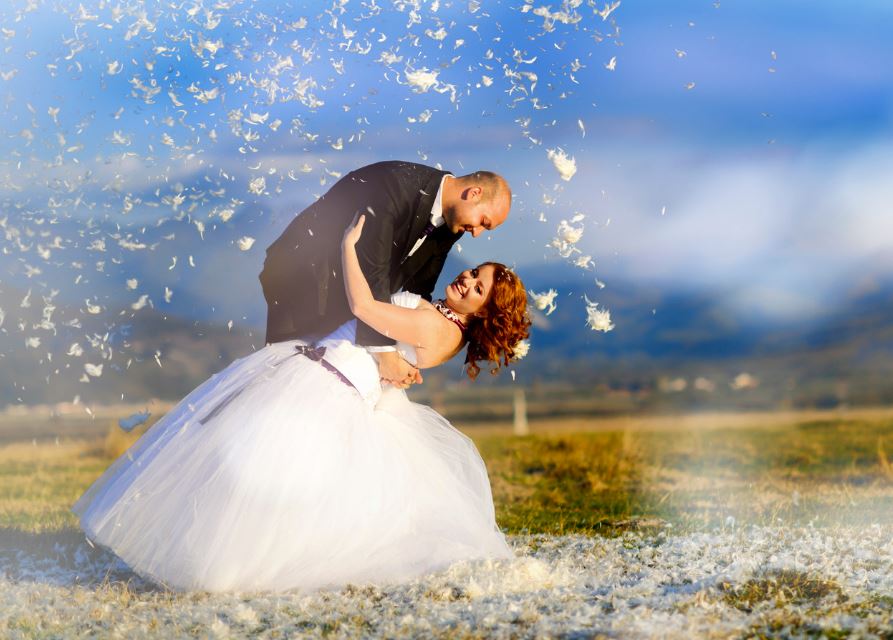
A wedding dream can leave you happy, unsettled or surprisingly emotional. Perhaps you were getting married, receiving a proposal or watching a ceremony that had little to do with your waking life.
You can explore the dream spiritually without treating it as a prediction or a command. Begin with the scene, the feeling and what a wedding represents to you personally.
Notice the emotion before choosing a meaning
Did you feel welcome, rushed, joyful, trapped, relieved or confused? The feeling may give you a more useful starting point than a fixed interpretation of the dress, ring or person standing beside you.
You do not have to make the dream positive if it was upsetting, or find a warning if it was pleasant. Record your response before deciding what it is supposed to mean.
Keep several possibilities open
| Dream scene | A possible reflection | What it does not establish |
|---|---|---|
| Your own wedding | Commitment, belonging, expectation or a change you are considering | That a wedding is approaching or that you must want marriage. |
| A proposal | An invitation, a decision or the wish to be chosen | That the person in the dream plans to propose. |
| An ex appears | A memory, an unresolved feeling or an association with that period | That you should contact them or that they want a reunion. |
| Someone else’s wedding | Your feelings about their milestone or your own comparisons | What their relationship is actually like. |
| A ceremony goes wrong | A concern about pressure, planning or loss of choice | That a real event will go wrong. |
These are prompts, not a universal dream dictionary. Your own associations may be different, and a dream can remain interesting without a final explanation.
Your relationship status is context, not a decoding key
If you are single, a wedding dream need not mean you are secretly desperate for a partner. If you are in a relationship, a happy ceremony does not automatically mean you are ready for marriage.
If you are married, divorced or grieving a partner, the dream may bring tender or difficult memories into view. Let the context matter without deciding that one dream reveals the whole truth about your feelings.
Try a short dream-journal page
- Write the parts you actually remember, leaving gaps where memory is unclear.
- Name the strongest feeling and the moment it appeared.
- List what weddings or proposals mean to you: celebration, obligation, family, belonging or something else.
- Ask whether a present-day question comes to mind.
- Choose whether that question needs an ordinary action, a conversation or no action at all.
For example, if the dream brought up pressure from family, you could consider a boundary about relationship questions. That is different from using the dream to predict your family’s next move.
Bring curiosity to a spiritual reading
You might ask “What does this scene bring into focus for me?” or “Which part of commitment feels important now?” Share only what you are comfortable discussing.
An interpretation is not independent confirmation of a proposal, pregnancy, reunion or another person’s private intentions. Keep real decisions connected to actual conversations and the information you have.
If the dream is distressing
You can put interpretation aside and return to something familiar and comforting. You do not need repeated readings before you are allowed to rest.
If regular nightmares are affecting sleep and everyday life, seek appropriate healthcare. The NHS guidance on nightmares explains when to ask for help. A spiritual interpretation need not replace attention to your sleep.
Leave room for an unfinished meaning
Perhaps the dream becomes a useful journal theme, perhaps it leads to a conversation, or perhaps its importance fades. You can appreciate what it stirred without making it a forecast you must fulfil.
I find it compelling how the article relates different dream scenarios to various emotional states and life situations.
The sections on being married and divorced provide a balanced view of how dreams can reflect both positive and negative aspects of past relationships.
This article provides a detailed analysis of wedding dreams. It’s interesting that these dreams can reflect various states of our personal relationships.
The advice at the end about not stressing over the dreams is quite practical. It’s important to remember that dreams are not always literal.
Exploring the different relationship statuses and how they influence wedding dreams adds a nuanced layer to dream interpretation.
While some interpretations seem speculative, the article does a good job of covering a broad range of possibilities. It’s a comprehensive guide for anyone curious about wedding dreams.
The idea that dreaming of proposing can symbolize confidence is intriguing. It suggests that dreams can be reflections of our internal state of mind.
Indeed, dreams can sometimes serve as a mirror to our deepest desires or concerns, and it’s always insightful to analyze them.
I agree. It’s fascinating how our subconscious can project our feelings and aspirations in such symbolic ways.
The explanations for different types of proposals seem very logical. They give a good perspective on what our subconscious might be trying to tell us.